
Yoga Props Explained
Yoga Props Explained: Blocks, Straps & Bolsters
Walk into a yoga class and see stacks of blocks, folded blankets, and long straps by the wall, and it’s easy to assume they’re only for people who “aren’t flexible enough” yet. In reality, props are used by beginners and advanced practitioners alike — they’re tools for better alignment, not a sign you’re doing yoga wrong.
At Ujain Yoga Studio, we keep props on hand in every class, and we actively encourage their use — they often make the difference between forcing a pose and actually feeling it.
Why Yoga Props Matter
Props exist to bring the floor, the wall, or the distance between your hands closer to you — supporting the body so a pose can be held safely and with proper alignment, rather than compensating with strain somewhere else. They’re especially valuable for:
- Beginners still building flexibility and strength
- Anyone with tight hips, hamstrings, or shoulders
- Injuries or physical limitations needing modified poses
- Restorative and Yin practices, where full support is the point
- Even advanced practitioners refining alignment in complex poses
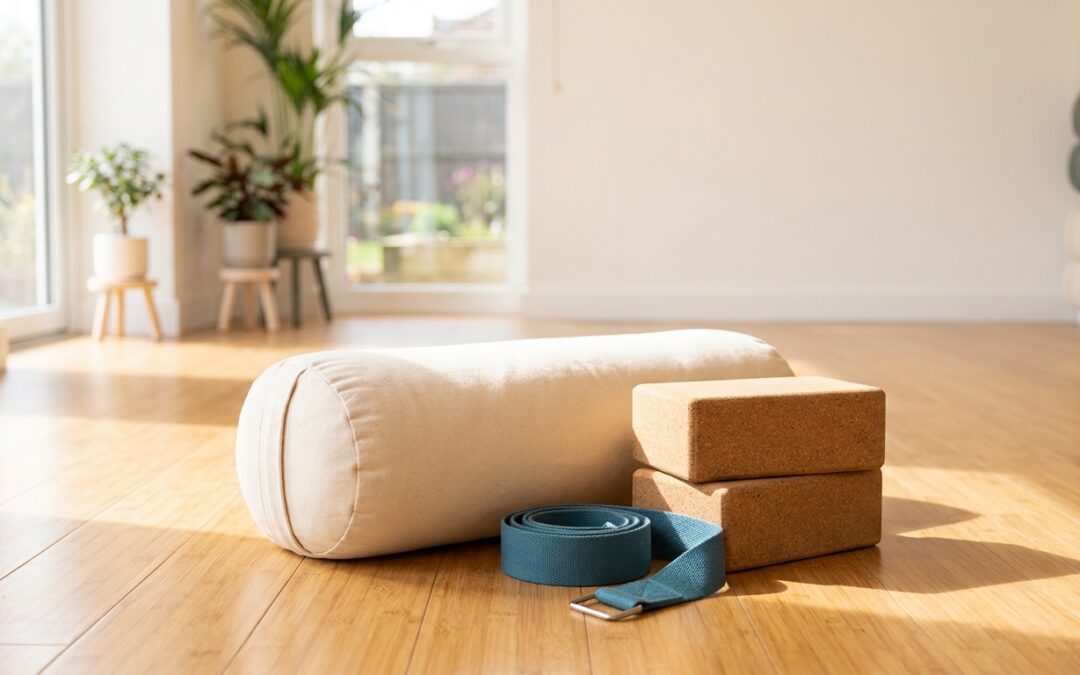
Yoga Blocks
What they are: Rectangular blocks made of foam, cork, or wood, usually 4x6x9 inches.
What they’re for:
- Bringing the floor “up” to you in poses like forward folds or triangle pose, when hands can’t comfortably reach the ground
- Supporting the hips in reclined or seated poses
- Adding stability in balance poses
- Creating gentle traction or support in restorative poses
Common poses: Triangle Pose, Half Moon, seated forward folds, supported Bridge Pose
Yoga Straps
What they are: Long fabric straps, often with a buckle, typically 6–8 feet long.
What they’re for:
- Extending your reach when hands can’t clasp behind the back or around the feet
- Helping maintain proper alignment in stretches without collapsing to force a deeper range
- Assisting in seated forward folds by looping around the feet
Common poses: Seated Forward Fold, Cow Face Pose (arm bind), reclined hamstring stretches, Bow Pose
Bolsters
What they are: Firm, cylindrical or rectangular cushions, larger and denser than a regular pillow.
What they’re for:
- Fully supporting the body in Restorative Yoga poses
- Elevating the chest or hips for gentle backbends and heart-openers
- Providing comfortable, sustained support during long-held poses
Common poses: Supported Child’s Pose, Supported Fish Pose, Reclined Bound Angle Pose
Blankets
What they are: Firmly folded yoga blankets (or any thick blanket at home).
What they’re for:
- Cushioning knees, wrists, or the spine in kneeling or lying poses
- Elevating the hips slightly for better alignment in seated poses
- Adding warmth during relaxation at the end of class
Common poses: Any kneeling pose, seated meditation, Savasana
Do You Really Need Props?
Short answer: no single prop is mandatory, but they consistently make poses more accessible, more comfortable, and safer — regardless of your experience level. Using a block isn’t a beginner’s crutch; it’s often exactly what an experienced practitioner reaches for to refine alignment in a challenging pose.
A simple guideline: if reaching for full expression of a pose means rounding your spine, straining a joint, or holding your breath, a prop will almost always serve you better than pushing further.
Getting Started With Props
Most studios provide props, so there’s no need to buy anything before your first class — you can simply ask your instructor how to use what’s available.
At Ujain Yoga Studio, props are available in every class, and our instructors are always happy to show you how to use them to get more out of each pose — whether you’re brand new or years into your practice.
Curious how props could improve your practice? Get in touch to book a class, or explore our class calendar.
Related reading: Beginner’s Guide: Your First Yoga Class · Restorative Yoga for Stress Relief · Yin Yoga Benefits


