
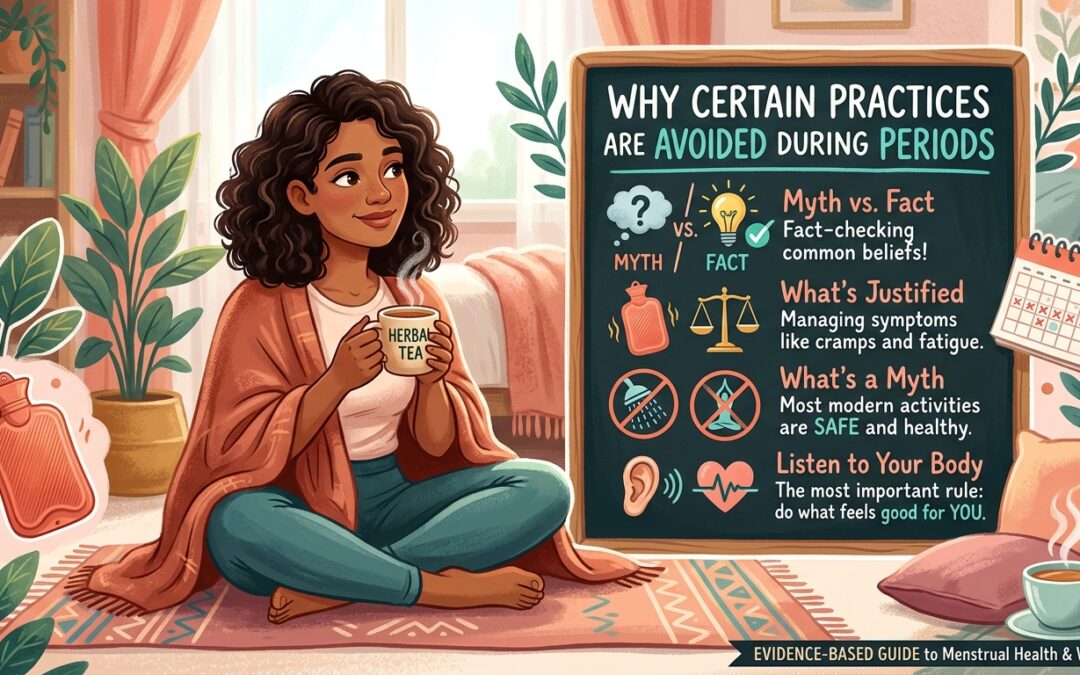
Practices to Avooid during PPeriods
For generations, menstruating individuals have been given a long list of “dos and don’ts” during their monthly cycle. From avoiding cold drinks and intense workouts to skipping baths, these restrictions are passed down through cultural tradition and family advice.
But why are certain practices avoided during periods, and is there any actual medical science behind them?
In this post, we’ll separate biological facts from age-old myths. You’ll learn which habits you should actually skip to feel your best during menstruation—and which outdated rules you can safely ignore.
1. What the Science Says: Practices You Should Avoid During Periods
While many traditional period rules are outdated, medical experts agree that your body goes through genuine hormonal and structural changes during menstruation. Here are the habits you should genuinely minimize or avoid during your cycle for health and comfort reasons.
A. Using Unscented or Douching Products
- The Reason: It might be tempting to use heavily scented soaps or intimate douches to eliminate period odors, but this practice does far more harm than good.
- The Science: Douching disrupts the vagina’s natural pH balance and strips away healthy bacteria (Lactobacilli). During your period, your cervix is slightly more open, making you more vulnerable to yeast infections and Bacterial Vaginosis (BV).
- Better Alternative: Wash gently using only warm water or an unfragranced, pH-balanced intimate cleanser on the external genital area (vulva) only.
B. Leaving Menstrual Products in Too Long
- Leaving a tampon, menstrual cup, or pad in for longer than recommended can lead to health risks.
- Stagnant menstrual blood creates an ideal breeding ground for bacteria. Leaving high-absorbency tampons in for more than 8 hours increases the risk of Toxic Shock Syndrome (TSS)—a rare but serious bacterial infection.
- Change pads every 4 to 6 hours, change tampons every 4 to 8 hours, and empty menstrual cups at least every 12 hours.
C. Overindulging in High-Sodium and Caffeine-Rich Foods
- What you eat directly affects how intense your cramps and bloating feel.
-
- Sodium: High amounts of salt cause fluid retention, making period bloating and breast tenderness noticeably worse.
- Caffeine: Caffeine acts as a vasoconstrictor, meaning it constricts blood vessels. This can tighten the blood vessels in your uterus, worsening menstrual cramps.
- Hydrate with warm water or herbal teas like chamomile or ginger, which help relax uterine muscles.
D. Skipping Pain Management Until It Gets Severe
- Many people wait until menstrual cramps become unbearable before taking pain relievers.
- Menstrual cramps are caused by prostaglandins—lipids that trigger uterine contractions. Over-the-counter anti-inflammatory medications (like Ibuprofen) work by blocking prostaglandin production. If you take them at the very start of cramps or bleeding, they are significantly more effective.
2. Myths Debunked: Practices You Don’t Need to Avoid
Many practices avoided during periods stem from ancient taboos rather than human biology. Let’s look at common period myths that science has disproven.
Myth 1: Avoid Bathing, Washing Your Hair, or Swimming
- There is no medical reason to skip bathing or showering while menstruating. In fact, staying clean helps prevent odors and bacterial build-up. Warm baths or showers can also help relax cramped abdominal muscles and improve blood flow.
Myth 2: Avoid All Physical Exercise
- While intense, heavy training might feel exhausting, light to moderate physical activity is highly beneficial. Exercise releases endorphins—your body’s natural painkillers—which help reduce cramp severity, boost your mood, and fight fatigue.
Myth 3: Don’t Eat Cold Foods or Drink Cold Water
- In many Eastern traditional medicine practices, cold foods are believed to disrupt blood flow. However, modern biology shows that stomach temperature does not dictate uterine function. If a cold beverage feels soothing, it is completely safe to enjoy.
3. How to Listen to Your Body During Your Cycle
Every body is unique. Instead of following rigid external rules, pay attention to how your body responds during the four phases of your cycle:
Prioritize Rest: Fluctuating progesterone and estrogen levels cause genuine fatigue. Allow yourself extra sleep when needed.
Track Symptoms: Use a period tracking app or journal to monitor mood swings, pain levels, and cravings.
Stay Hydrated: Drinking plenty of water actually reduces water retention and bloating.
Final Thoughts
Understanding why certain practices are avoided during periods empowers you to make informed decisions for your body. Skip the harmful habits—like douching or wearing products too long—and dismiss the old myths that restrict your daily lifestyle.
What is a period myth you grew up hearing? Share your thoughts in the comments below!
FAQ Section (Ideal for WordPress Schema / Rich Snippets)
Q: Why do doctors advise against douching during your period? A: Douching disrupts the natural vaginal flora and pH level, increasing your risk of vaginal infections such as bacterial vaginosis and yeast infections.
Q: Is it safe to exercise while on your period? A: Yes, light to moderate exercise (like yoga, walking, or light cardio) can reduce cramps and improve mood by releasing endorphins.
Q: Can I wash my hair during my period? A: Absolutely. Washing your hair or taking a warm bath during your period has no negative biological effect and can help soothe body aches.
Getting Started
At Ujain Yoga Studio, we build sessions that combine grounding movement with breathwork, giving students practical tools they can lean on well beyond the studio.
Ready to find some calm? Get in touch to book a class, or explore our class calendar.
Related reading: Pranayama Breathing Techniques for Beginners · Restorative Yoga for Stress Relief · Yoga Nidra: The Art of Yogic Sleep


