
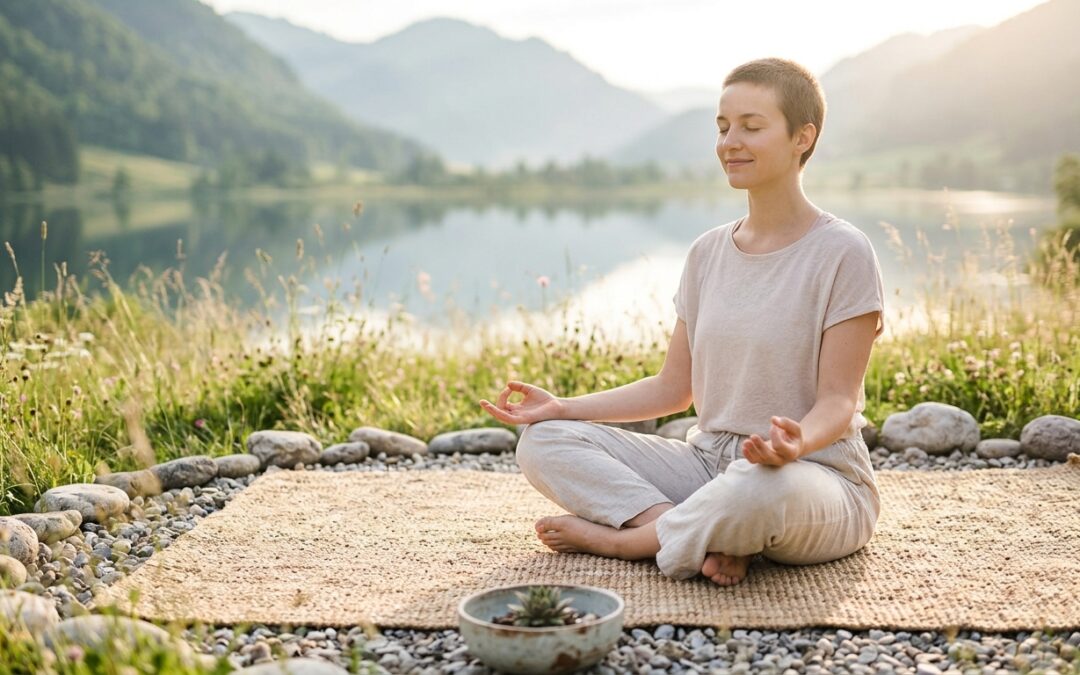
Meditation 101: A Simple Guide to Getting Started
Meditation often sounds simple in theory — just sit and be present — and surprisingly difficult in practice, especially for a mind used to constant stimulation.
The good news: meditation isn’t about achieving a blank mind or perfect stillness. It’s a trainable skill, and like any skill, it starts small and builds with consistency.
At Ujain Yoga Studio, meditation is something we introduce gradually — a few minutes at a time — because that’s genuinely how a sustainable practice gets built.
What Meditation Actually Is (and Isn’t)
Meditation is the practice of intentionally directing attention — often to the breath, a sound, or simple awareness — and gently returning to that focus whenever the mind wanders, which it will, repeatedly. It is not:
- Forcing your mind to go blank
- A religious requirement (though it has spiritual roots, it’s practiced secularly by many)
- Something you either succeed or fail at — noticing you’ve wandered and returning is the practice
Benefits of a Regular Practice
- Reduced stress and anxiety through consistent nervous system regulation
- Improved focus and attention span over time
- Better emotional regulation and reduced reactivity
- Support for better sleep, especially with evening practice
- Greater overall self-awareness
Simple Techniques for Beginners
1. Breath Awareness Meditation
Sit comfortably, close your eyes, and simply notice the sensation of breathing — the rise and fall of the chest or belly. When your mind wanders, gently return attention to the breath. No counting or control needed, just observation.
2. Body Scan Meditation
Lying down or seated, slowly bring attention through each part of the body, noticing sensation without trying to change anything. Excellent for winding down or before sleep.
3. Guided Meditation
Following a teacher’s voice, either live or recorded, can be easier for beginners than sitting in silence — it gives the mind something structured to follow.
4. Mantra Meditation
Silently repeating a simple word or phrase (such as “peace” or “let go”) gives the mind an anchor, useful for those who find pure silence too unstructured at first.
Building a Realistic Practice
- Start small — even 3-5 minutes daily builds the habit better than an occasional 30-minute session
- Same time, same place — consistency of routine makes the habit easier to sustain
- Don’t judge the session — a “distracted” sit is still a successful practice; noticing distraction is the skill being built
- Use a timer — removes the temptation to check the clock and lets you fully settle in
Common Beginner Struggles (And Why They’re Normal)
“I can’t stop thinking.” Nobody can — the goal isn’t a thought-free mind, it’s noticing thoughts and gently returning to your anchor.
“I don’t have time.” Even a few minutes counts; consistency matters more than duration.
“I don’t know if I’m doing it right.” If you’re sitting with intention and returning your attention when it wanders, you’re doing it right.
Getting Started With Guidance
Having someone guide your early sessions can make the difference between frustration and genuine progress — especially in learning how to gently redirect a wandering mind without frustration.
At Ujain Yoga Studio, meditation is woven into many of our classes, and we also offer sessions focused purely on building this foundational skill.
Ready to build a practice that actually sticks? Get in touch to book a session, or explore our class calendar.
Related reading: Yoga Nidra: The Art of Yogic Sleep · Pranayama Breathing Techniques for Beginners · Ajna Chakra: The Third Eye


