
Why Doing Less Can Heal More
Most of us respond to stress by pushing harder — more errands, more scrolling, more “I’ll rest when I’m done.” Restorative Yoga flips that instinct on its head. It’s a practice built entirely around supported stillness, and for many students it becomes the single most effective tool they have for managing chronic stress.
At Ujain Yoga Studio, we often recommend Restorative Yoga to students who feel constantly “wired but tired” — busy professionals, new parents, and anyone whose nervous system rarely gets permission to switch off.
What Makes Restorative Yoga Different?
Restorative Yoga uses props — bolsters, blankets, blocks, and cushions — to fully support the body in a small number of gentle poses, each held for 5 to 20 minutes. There’s no stretching to your edge, no strength work, and no effort to “achieve” the pose. The prop does the holding; your only job is to breathe and be still.
This is different from Yin Yoga, which targets connective tissue with gentle tension. Restorative Yoga aims for zero tension — it’s about complete physical support so the body can fully let go.
How Restorative Yoga Relieves Stress
1. Shifts the Body Out of “Fight or Flight”
Chronic stress keeps the sympathetic nervous system activated — elevated heart rate, shallow breathing, tense muscles. Long, supported holds send a strong signal of safety to the brain, activating the parasympathetic (“rest and digest”) response.
2. Lowers Cortisol Naturally
Studies on restorative and supported relaxation practices consistently show reduced cortisol levels after sessions, which over time supports better mood, digestion, and sleep.
3. Eases Physical Tension Without Effort
Stress often shows up as tight shoulders, a clenched jaw, or a stiff lower back. Because Restorative Yoga requires no muscular effort, the body can release tension it’s been unconsciously holding.
4. Creates Space for Mental Quiet
With nowhere to go and nothing to do, the mind naturally slows down. Many students describe it as the first time all week they’ve felt fully present.
5. Supports Recovery from Burnout
For those recovering from overtraining, illness, or emotional exhaustion, Restorative Yoga offers movement and mindfulness without taxing an already depleted system.
Simple Restorative Poses to Try
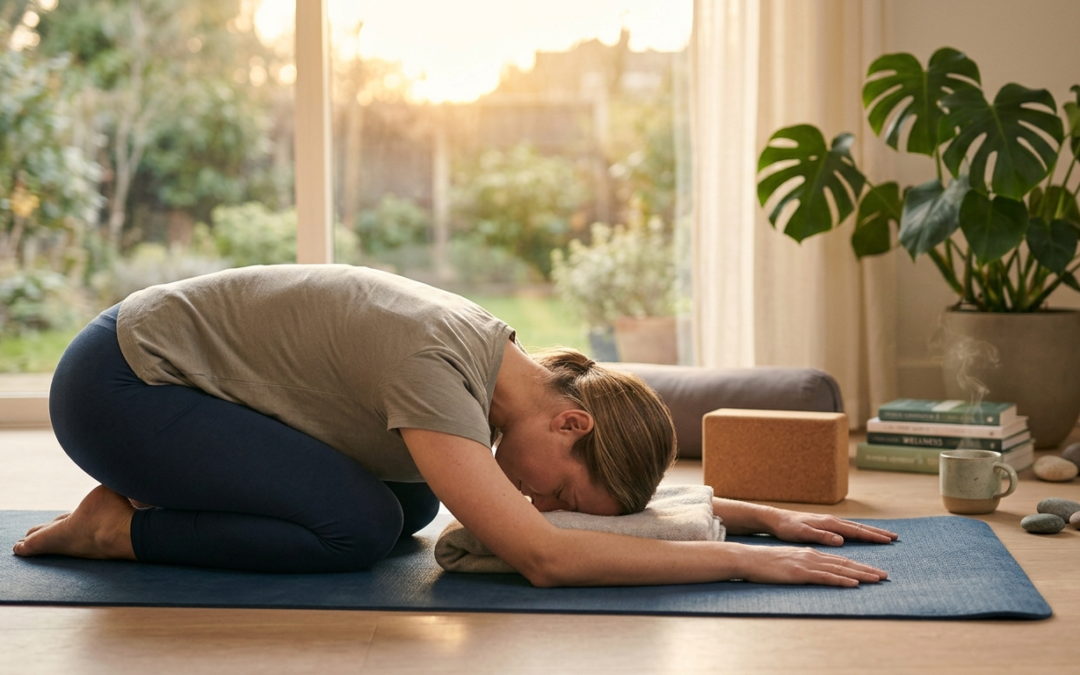
- Supported Child’s Pose — bolster under the torso, forehead resting down
- Reclined Bound Angle Pose — soles of feet together, knees supported by blocks or cushions
- Legs-Up-The-Wall — deeply calming, great for tired legs and anxious minds
- Supported Fish Pose — bolster along the spine to gently open the chest
- Savasana with Support — blanket under the knees, eye pillow, and full permission to do nothing
Each pose can be held for as long as feels comfortable — there’s no rush, and props can always be adjusted for your body.
Who Benefits Most From Restorative Yoga?
- People experiencing high stress, anxiety, or burnout
- New or expecting parents needing gentle movement
- Anyone recovering from illness, injury, or surgery (with guidance)
- Students who find fast-paced classes overwhelming
- Active practitioners needing a true recovery day
Getting Started
You don’t need flexibility, fitness, or prior yoga experience to begin — only a willingness to slow down. At Ujain Yoga Studio, our Restorative sessions are guided with the same personal attention as our active classes, with props provided and poses adapted to your body and needs.
Feeling stretched thin? Reach out to book a Restorative session, or check our class calendar for upcoming times.
Related reading: Yin Yoga Benefits · Hatha Yoga · What is Yoga?


