
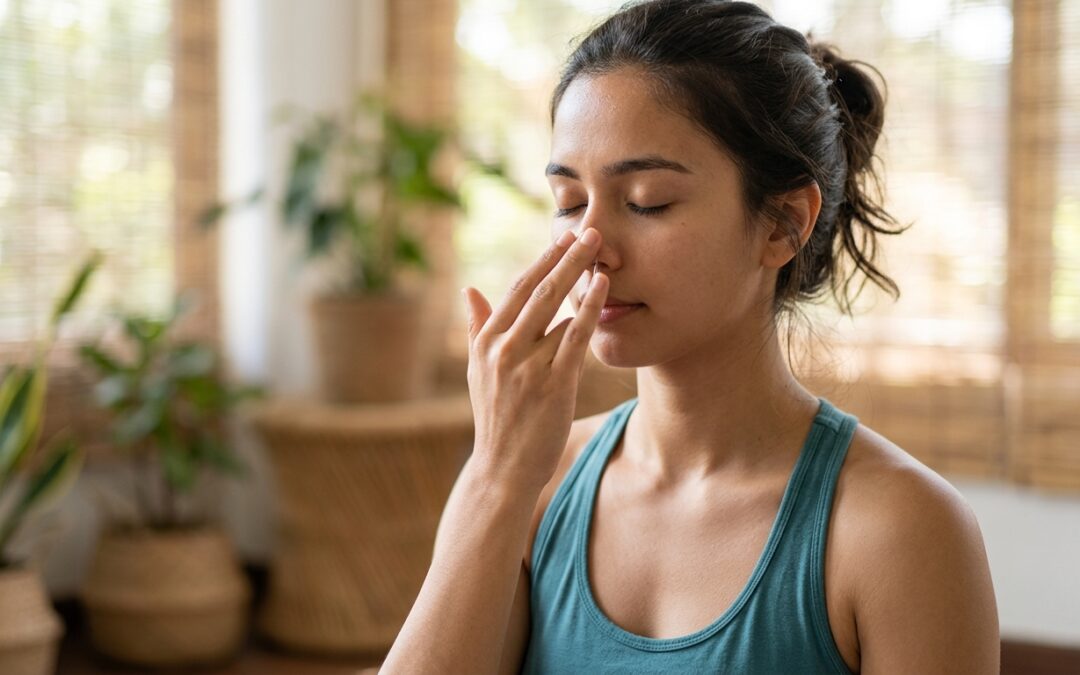
Pranayam Breathing Techniques for Beginners
Long before “breathwork” became a wellness buzzword, yogis had already mapped it out in detail. Pranayama — the yogic science of breath control — is one of the oldest tools for calming the nervous system, sharpening focus, and building energy, and you don’t need a mat, flexibility, or any prior experience to begin.
At Ujain Yoga Studio, we introduce Pranayama early in every student’s journey, because breath is the thread that connects every other style of yoga we teach.
What Is Pranayama?
“Prana” means life force or vital energy, and “ayama” means to extend or control. Together, Pranayama refers to a set of specific breathing techniques designed to regulate the breath — its length, rhythm, and pathway — in order to influence both body and mind.
Where everyday breathing happens automatically and often shallowly, Pranayama makes breathing intentional. This shift alone can measurably affect heart rate, blood pressure, and mental state within minutes.
Beginner-Friendly Pranayama Techniques
1. Diaphragmatic Breathing (Belly Breathing)
The foundation of all Pranayama. Place one hand on your belly, inhale slowly through the nose so the belly rises (not the chest), then exhale fully. Practicing this for even five minutes daily retrains shallow breathers to use their full lung capacity.
2. Nadi Shodhana (Alternate Nostril Breathing)
Using the thumb and ring finger to alternate closing each nostril, this technique balances the two hemispheres of the brain and is known for calming anxiety and improving focus. It’s often taught as a bridge between active life and meditation.
3. Ujjayi Breath (Ocean Breath)
A slight constriction at the back of the throat creates a soft, audible “ocean-like” sound on both inhale and exhale. Ujjayi is commonly used during Vinyasa and Ashtanga practice to maintain steady focus and internal heat.
4. Bhramari (Humming Bee Breath)
Exhaling with a gentle humming sound while ears are lightly covered, Bhramari is especially effective for quickly reducing anxiety, anger, or racing thoughts — often used right before sleep.
5. Kapalabhati (Skull-Shining Breath)
A more energizing technique involving short, forceful exhales and passive inhales. Kapalabhati is used to build heat, clear the mind, and increase alertness — best learned under guidance, and avoided during pregnancy or with certain health conditions.
Benefits of Regular Pranayama Practice
- Stress and anxiety reduction through activation of the parasympathetic nervous system
- Improved lung capacity and respiratory efficiency
- Better focus and mental clarity, useful before study, work, or exams
- Lower blood pressure with consistent long-term practice
- Enhanced emotional regulation, giving you a tool to reach for in stressful moments
How to Start Practicing Safely
- Begin with just 5–10 minutes a day using Diaphragmatic Breathing or Nadi Shodhana
- Practice on an empty stomach, ideally morning or evening
- Sit comfortably with a tall spine rather than slouched or lying down (except for Diaphragmatic Breathing)
- Avoid forceful techniques like Kapalabhati if you’re pregnant, have high blood pressure, or a respiratory condition — check with your instructor first
- Never force the breath; if you feel dizzy or lightheaded, return to normal breathing
Getting Started With Guidance
While simple in principle, Pranayama has real physiological effects — which is exactly why learning proper technique from an instructor matters, especially for the more advanced practices.
At Ujain Yoga Studio, Pranayama is woven into our classes and also taught as a standalone foundation for students who want to build a strong home practice.
Ready to breathe with intention? Get in touch to book a class, or explore our class calendar.
Related reading: Yoga Nidra: The Art of Yogic Sleep · Hatha Yoga · What is Yoga?


A beautifully explained and insightful blog on Pranayama. It highlights how conscious breathing can bring greater awareness, calmness, and balance to our everyday lives. A wonderful reminder that the breath is not just a physiological process, but a powerful bridge between the body and mind. 🙏✨